

The Uzbekistan delegation is actively participating in the 70th Session of the UN Commission on the Status of Women, in New York.
During the session, an interactive dialogue was held on ensuring justice for all women and girls. The participants discussed ways to increase women’s access to justice, as well as measures to reform discriminatory laws and eliminate systemic barriers.
Issues related to gender-based violence, family law, labor relations, and existing obstacles in administrative justice were considered during the discussion. Special attention was paid to the roles of formal and informal justice systems, the digitalization of judicial processes, and interactions with traditional justice institutions.
Deputy Chairman of the Supreme Court Malika Qalandarova took part in the interactive dialogue. She provided information about the ongoing reforms in Uzbekistan aimed at increasing women’s access to justice and achieving gender equality in the judicial system.
As noted, there are currently 1,589 judges in Uzbekistan’s judicial system, of whom 245 are women. Compared to 2017, this figure has increased by more than 113 percent. It is planned to increase the proportion of women in the judicial system to at least 30 percent.
It was emphasized that, at the initiative of President Shavkat Mirziyoyev, special educational quotas for training women judges were introduced at the Academy of Justice of the Republic of Uzbekistan, and the Association of Women Judges was established.
Special attention was paid at the event to the issues of protecting women from violence, expanding access to legal aid, and organizing the work of specially trained judges and investigators to deal with cases related to violence against women and children.
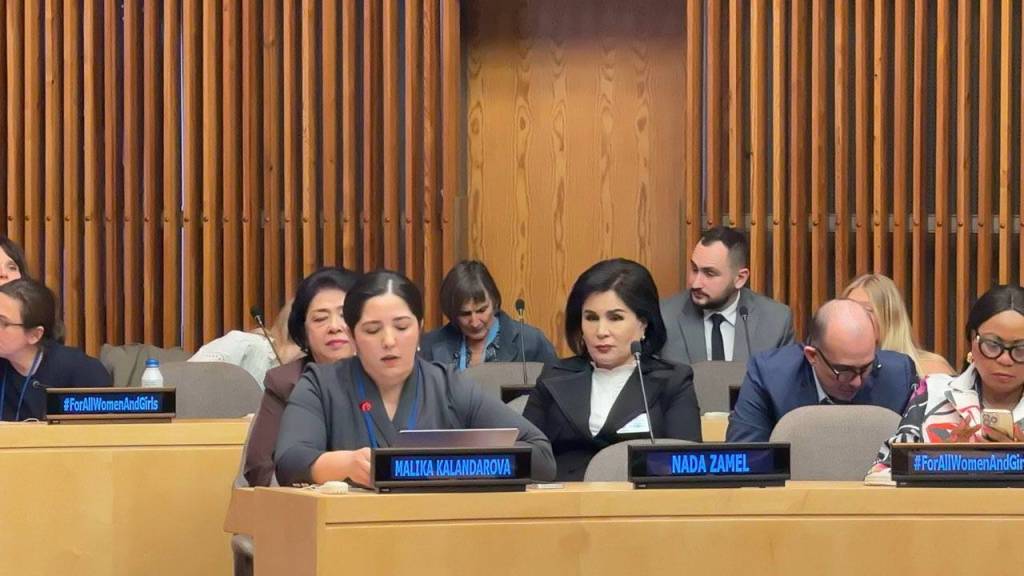
The delegation members also participated in the plenary sessions and thematic discussions. During these events, the participants were informed about reforms in Uzbekistan aimed at supporting women, protecting their rights and interests, and increasing their participation in public and political life.
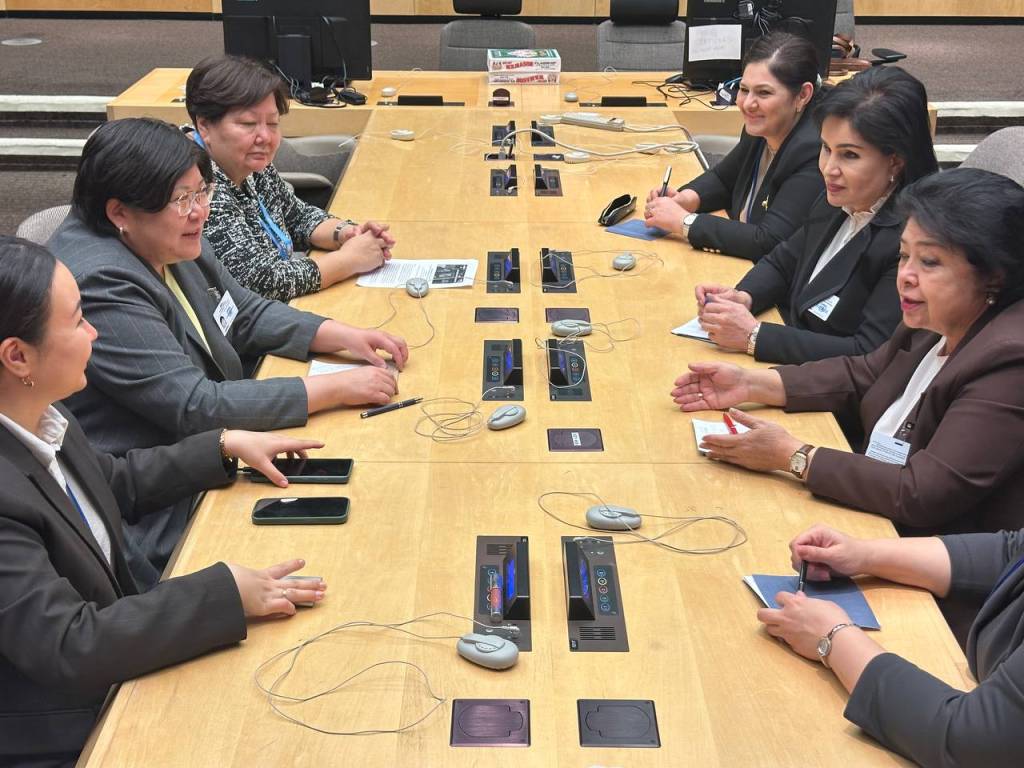
Issues of expanding cooperation between the two countries to protect women’s rights, ensure gender equality, increase women’s economic and social participation, and strengthen the family institution were discussed with the delegation of Kazakhstan. Following the meeting, an agreement was reached on further development of cooperation and exchange of experience.
Norgul Abduraimova, UzA