

On 27 November, President Shavkat Mirziyoyev reviewed the report of the National Statistics Committee of the Republic of Uzbekistan.
In February this year, the Presidential Decree “On additional measures to advance the system of organizing and conducting statistical work to a new stage” was adopted. In accordance with this document, the Statistics Agency under the President was transformed into the National Statistics Committee, and priority directions for improving statistical activities were defined.
The work carried out during the past period was reviewed at the meeting.
In particular, due to the expansion of interdepartmental data exchange and the implementation of 60 integrations, the reporting burden on business entities has been reduced by 27 percent. Automated reception of data from the tax authorities’ online cash registers, information on electricity and natural gas consumption, as well as data on agricultural sown areas and yields has been established.
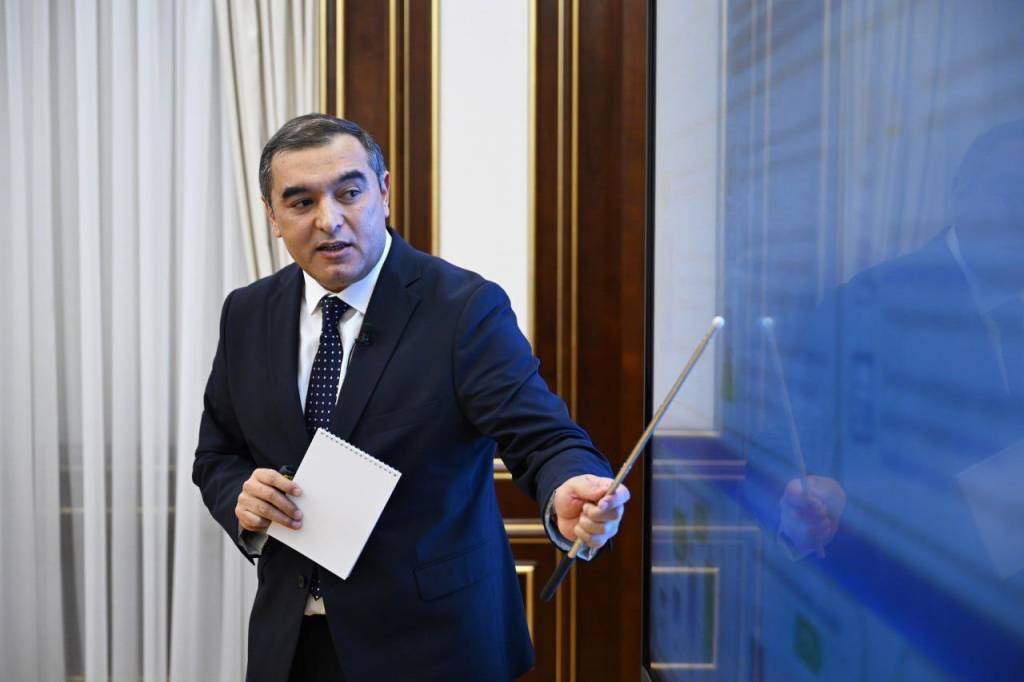
Information was presented on the work to improve the calculation of the nominal volume of gross domestic product.
Thanks to broader statistical coverage of market services, construction, agriculture, industry, and budget expenditures, an additional 81 trillion UZS of value added was recorded. As a result, Uzbekistan’s GDP for 2024 increased from $115 billion to $121.4 billion.
The share of the shadow economy decreased from 50 percent in 2017 to 35 percent in 2024. In the near future, there is potential to additionally capture 79 trillion UZS of informal economic activity in official statistics, reducing its share to 29 percent.
The President noted that e-commerce is growing rapidly worldwide. High growth rates – at the level of 9-11 percent – are also expected in Uzbekistan. IT services, remote services, freelancing, and other new sectors are developing quickly. The national statistical system is tasked with ensuring full coverage of these areas as well.
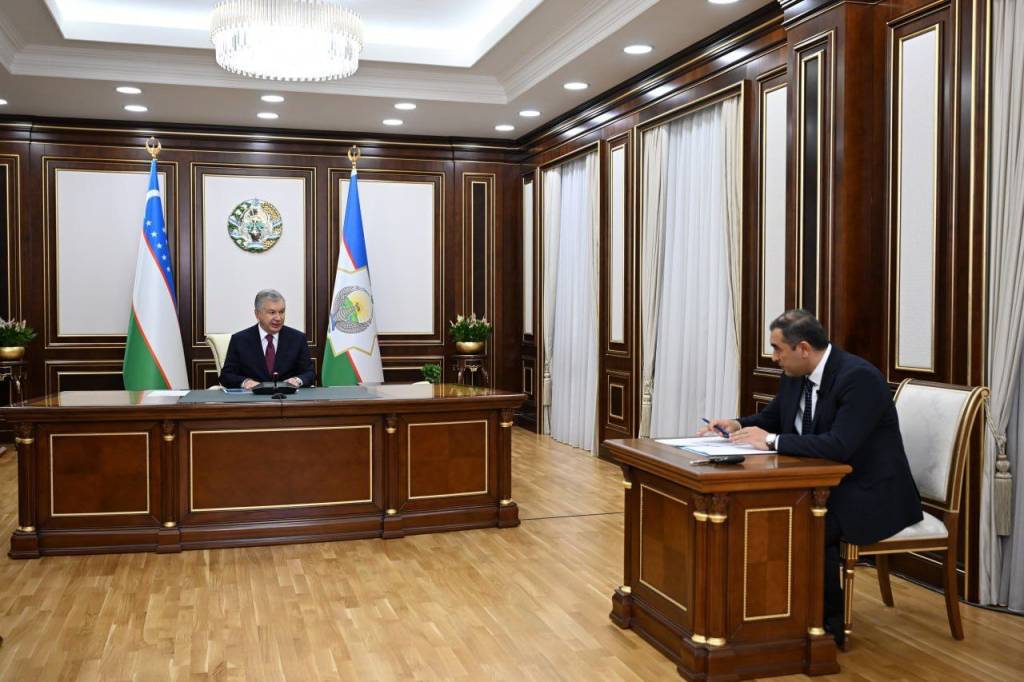
The necessity of abandoning manual data collection in calculating the consumer price index and gradually transitioning to IT solutions and artificial intelligence technologies was emphasized.
Issues related to transforming national statistics into a modern, internationally recognized system were also reviewed.
It was noted that the international consulting company Deloitte has developed 23 initiatives and 70 projects. Their phased implementation will help improve the accuracy, efficiency, and transparency of statistical data. In addition, a National Strategy for the Development of Statistics 2030 is being developed jointly with the World Bank.
Preparations for the population census, which will begin in January next year, were discussed.
To date, organizational plans have been approved for 9,008 mahallas, and special training courses have been conducted for more than 60,000 members of the “mahalla of seven” and responsible staff involved in the census.
The census will be conducted electronically through a special portal. Enumerators will record data in the portal using tablet devices while conducting door-to-door visits. The process will be monitored through a geoinformation system. For this purpose, the geolocations of houses and residential premises to be registered have been mapped.
The President was briefed on the readiness of these activities in the regions.
It was noted that the census processes need further improvement, including enhancing skills in using digital platforms, developing specific solutions for enumerating citizens who have gone abroad for work, study, or business trips, and ensuring the integration of data collected through both door-to-door and online surveys.
Emphasizing that accurate, prompt, and reliable statistics are essential to determining state policy and implementing economic and social reforms, the President instructed that the sector’s transformation continue based on a strategic approach.
Responsible officials were instructed to ensure that the population and agricultural censuses are carried out at the highest organizational level.
UzA